THE MINDSET
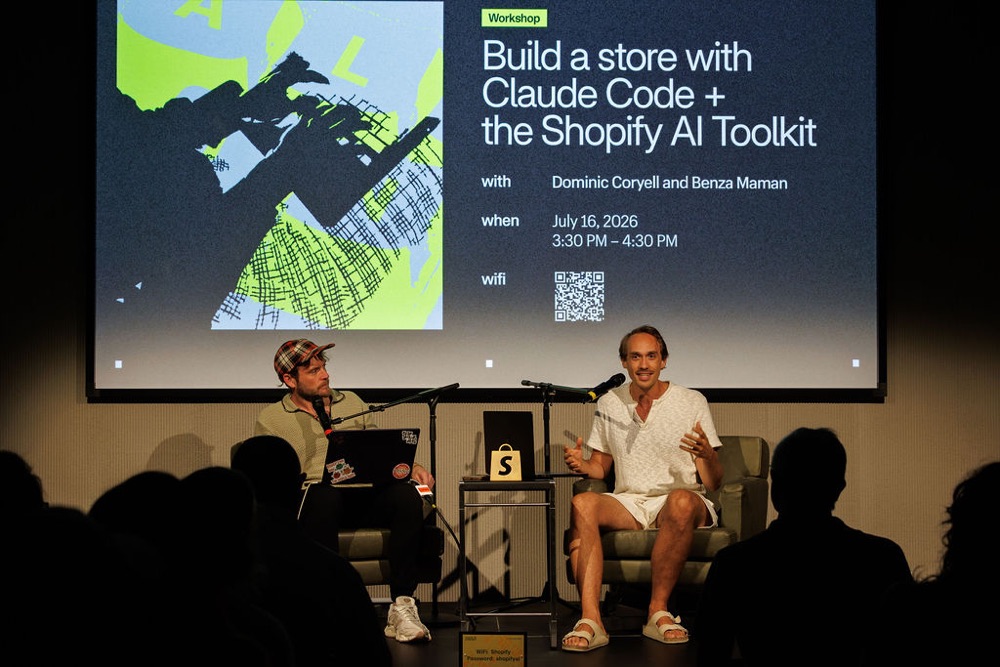
The whole point of the event: show what's possible when you work with Claude Code in a curious way — share your ideas and goals, and let it guide the execution.
- 🤖 You have a digital developer nowClaude Code is an agent that lives inside your computer. It's called an "agent harness" because it translates what you want into real, working workflows.
- 🎯 This is objective-oriented programmingYour job is explaining what you want and making sure it understands your goals. The single best technique: keep telling it what you want, keep asking questions, and be honest — "I have no idea what to do next, please help me" is literally how Dom and Benza learned everything.
- 🧠 Not technical? Zero disadvantageYou're limited only by imagination, determination, patience, and how much context you can hold in your brain. If you're ADHD — our time has finally come to channel it and be hyper-human!
- 👑 Defer to the best modelIt costs more, but you know you're getting max power — your tools are an extension of your creativity. On a budget? For grunt work (like scraping videos) a lower tier is fine. When unsure, just ask: "which model is most efficient for this job?"
- ⚠️ One real precautionIf you're a real merchant with a real store, be very mindful about what you ask the agent to do — some things really hurt (Dom has been through it). And never, ever let people you don't trust connect to your store.
THE ESSENTIALS (FROM BENZA)
A few things that make everything below go smoother once you're in a Claude Code session:
- 🎛️ Pick the right modelDefault to the most capable model for real thinking or building. Drop to a lighter one for cheap, repetitive jobs like scraping or formatting. Not sure? Just ask Claude "which model is most efficient for this job?"
- 💾 Save your skillsWhen you find a workflow that works, have Claude save it as a skill so you can reuse it later instead of re-explaining every time. Your setup gets more powerful the more you save.
- 📝 Use a CLAUDE.mdA memory file at the root of your project. Put the context Claude should always know in there (your business, your preferences, how you work) — it reads it every session so you stop repeating yourself.
- 🧹 Clear your contextLong sessions get cluttered and Claude starts losing the thread. Use /clear to start fresh, or /compact to summarize and keep going. When the answers start drifting, clearing context usually fixes it.
SETUP
Setup is the most technical part. Get through it once and you are golden. Dom made a whole page walking you through it:
🕹️ THE TUTORIAL ARCADE
Three worlds. Pop open a cartridge, hit COPY PROMPT, paste it into Claude. That's the whole tutorial.
🏪 BUILD YOUR STORE
From nothing to a live storefront — or plug Claude into the store you already run.
NEW STORE FROM SCRATCH
Claude builds you a preview store you can claim
▶
Ask Claude and it walks you through creating a preview store. Open it in your browser, tap Save at the bottom, sign up — your sessions link up and you keep vibing in Claude from there (theme, product pages, all of it — see the other cartridges).
Claude, I want to build a new Shopify store for {{insert whacky idea here}}
CONNECT AN EXISTING STORE
Already selling? Plug Claude in
▶
Claude will walk you through the whole connection if you just ask:
Claude, can you help me connect my Shopify store?
THE THEME BUILDER
A world-class store designer that interviews you first
▶
This is the big one — a three-phase prompt that interviews you, pitches a plan, then builds your whole theme end to end:
You are the world's best e-commerce store designer and conversion strategist, and I've hired you to design and build my online store with me. We'll work in three phases. Don't skip ahead.

PHASE 1 — INTERVIEW ME
Ask me questions one round at a time (max 4-5 questions per round, then wait for my answers). Cover at least:
1. The product: what I sell, variants, prices, and any digital products, services, or bundles
2. The customer: who buys this, what they care about, and what would make them hesitate
3. The brand: my store name, the mood/aesthetic I want (give me 2-3 named directions to pick from if I'm unsure), and any brands whose look I admire
4. The story: why this product exists and the one belief I want a visitor to leave with
5. Assets & constraints: what photos/logos I already have, my budget for apps and tools, my platform preference (if any), and anything that's off-limits
If my answer is vague, push back once with a sharper version of the question. If I say "you decide," make the call and tell me what you chose and why.

PHASE 2 — PITCH THE PLAN
Present one recommended concept (not a menu of options): the brand direction, the homepage section-by-section with the actual headlines you'd use, the conversion strategy behind each section, and what you'll build vs. what needs me (photos, accounts, apps). Keep it under a page. I'll approve or redline it.

PHASE 3 — BUILD
Once I approve, build it end to end without asking for further approval: create/update the store, products, and theme; verify the result renders correctly in a browser; and show me screenshots or open it for me. Finish with a punch list of what's left that only I can do.

My starting idea: [one or two sentences about what you want to sell and the feel you want — e.g. "handmade ceramic mugs with a warm, cottage-kitchen feel, plus a digital recipe e-book"]
📈 GROW IT
Connect your tools (ads, content, Shopify, analytics) and put an AI growth team on retainer.
GROWTH CONSULTANT ON RETAINER
Ex-McKinsey energy, grounded in YOUR real numbers
▶
From office hours: if you can connect all your tools, Claude can act like a top-tier growth consultant — four phases, no generic advice allowed:
You are a top-tier growth strategy consultant (think ex-McKinsey, now specialized in e-commerce brands) and I've put you on retainer for my business. Your job is to understand what's actually happening in my business, find the biggest opportunities, and help me execute them. We'll work in four phases. Don't skip ahead, and never give me generic advice — every claim you make should be grounded in my real numbers.

MY BUSINESS
What we sell: [one or two sentences]
Roughly where we are: [e.g. "$40k/month, mostly from Instagram ads, flat for 6 months"]
My #1 goal right now: [e.g. "grow profitably", "fix retention", "reduce ad dependence"]

WHERE MY DATA LIVES
Store: [e.g. Shopify]
Ads: [e.g. Meta, Google, TikTok]
Analytics: [e.g. GA4, Triple Whale]
Email/SMS: [e.g. Klaviyo]
Content/social: [e.g. Instagram, YouTube, blog]
Other: [spreadsheets, Notion, anything else]
Tell me which of these you can connect to directly, walk me through connecting them, and flag which ones you can't see so we know where we're blind.

PHASE 1 — LEARN THE BUSINESS
Pull real data from every connected tool. Build me a one-page picture of the business: revenue and trend, where customers come from, what it costs to acquire them, what they buy, whether they come back, and which products/channels actually make money. Show your numbers. Where data is missing, say so — don't estimate silently. Ask me only the questions the data can't answer.

PHASE 2 — DIAGNOSE
Tell me the 3-5 things that matter most, ranked. For each: what the data shows, why it's happening (your hypothesis), and what it's costing me or could earn me, in dollars. Include at least one thing I probably don't want to hear. This is the part I'm paying you for — be direct.

PHASE 3 — OPPORTUNITY PLAN
Turn the diagnosis into a prioritized plan: for each opportunity, the specific action, expected impact, effort, and how we'll measure success. Sort by impact-to-effort. Tell me which items you can execute yourself with the connected tools and which need me. I'll approve or redline the list.

PHASE 4 — EXECUTE AND REVIEW
Execute the approved items that are within your reach (drafting campaigns, updating the store, building reports, writing content). Always show me anything customer-facing or that spends money before it goes live. Then set up a recurring rhythm: each week, pull fresh numbers, tell me what changed, whether our bets are working, and what we do next.

STANDING RULES
- Numbers over opinions. If you haven't seen the data, say "I haven't seen this."
- Push back on my ideas when the data disagrees. Once, clearly, with the numbers.
- If I say "you decide," decide and tell me why.
- Distinguish clearly between "the data shows" and "I'm guessing."
THE ADS MACHINE
The "ads tournament" that cut CPC 6x for Happy Hoots
▶
Dom took all the Happy Hoots content, made ads compete against each other to see which converts best, cut CPC 6x, learned which themes work, then created digital influencers around the winners.
All the tutorials and prompts are at the bottom of that page.
THE ADVERTORIAL PAGE
A story that sells — on its own domain
▶
See the real example Dom built for Happy Hoots: naturemoms.org/happy-hoots-review. The recipe: buy a domain, connect it to Vercel, and ask Claude:
Build me a high-converting advertorial page for my product. Before you write a single word, interview me. Ask one question at a time: what the product is, who actually buys it, what pain drives the purchase, my best proof (reviews, results, my own story), the offer and price, and where a sale happens. Keep going until you could sell this thing yourself — don't start writing while you're still guessing.

Then give me a checklist of the content you need from me — product photos, review screenshots, real customer quotes, links — and have high standards: if something I give you is weak or generic, say so and tell me exactly what better looks like. Don't politely work around bad inputs.

Then write the advertorial like a story, not an ad. A real customer's point of view, listicle structure ("6 reasons [my audience] are switching to…"), hook in the very first line, one idea per section, specific details instead of adjectives, one clear call-to-action repeated a few times. Mobile-first — most readers are on phones.

Test yourself before showing me: if any paragraph could be pasted onto a competitor's product without edits, it's too generic — rewrite it. If you don't know something, ask me; never invent facts, reviews, or numbers. Show me a preview and get my sign-off before anything is published, and tell me where you'd send ad traffic first to test it cheaply.
OPS & SERVICE AUTOPILOT
Two real office-hours builds to steal
▶
Custom operations flows: one merchant now pipes all the custom metadata from each order into Claude, which runs a daily routine making sure the right materials are pre-ordered for staff the next day. That kind of operational efficiency is totally possible.
Custom service engine: another merchant connected all their messaging accounts and built an automated response engine — with semantic grouping of questions so more and more of it automates over time.
No magic prompt needed for these — just describe your workflow to Claude and ask "how could we automate this?"
THE CONTENT ENGINE
Benza's build — content at scale, not one post at a time
▶
Instead of making one piece of content at a time, build an engine that researches what's working, writes in your voice, and produces the visuals — so you create at scale. The rough shape:
- 🔍 RESEARCHPoint Claude at the accounts and videos already winning in your niche and have it pull the patterns — hooks, angles, formats — that actually get watched.
- ✍️ SCRIPTSHave it write short-form scripts in your voice off those patterns. In batches, not one at a time.
- 🎥 VISUALS & VIDEOBenza uses Higgsfield to generate the imagery and b-roll (the same tool from the Cartoon Studio cartridge) — content gets made without a full production team.
- 📡 DISTRIBUTIONConnect your accounts so drafts get queued and posted across platforms on a schedule.
🎨 CREATE WEIRD STUFF
No product? No problem. And when you have one — make cartoons about it.
CARTOON STUDIO
Build cartoon ads with Dom's open-source skill
▶
Dom built a full cartoon ad for Happy Hoots this way — watch it on Instagram. Want your own? Copy-paste this (it'll prompt you to create a Higgsfield account — the same tool Benza uses for his content engine):
I want to make a cartoon following this framework from Dom's skill https://github.com/domco685/ai-cartoon-studio-skill — can you walk me through what I need to do?
NO PRODUCT? NO PROBLEM
Two ways to start selling today
▶
Sell someone else's winner. Find a merchant with a high-converting product who'll pay you to sell it through Shopify Collective — you add their product to your store and they fulfill it.
Make a digital product. Create one with Claude Design, Canva, or Claude Code, then sell it with the Digital Products app.
LEVEL UP WITH BENZA
Benza has taught over 500,000 students, is a #1-rated AI instructor on Udemy, and has trained teams at companies like Samsung and L3Harris. He runs multi-day bootcamps and hands-on single-day sessions with companies. Dom went through his first-ever bootcamp and had the best time — yes, even Dom learned something — plus met amazing people who are still in a group chat talking about all this stuff. As bootcamp grad Alexis put it: one of the best investments she's ever made in her business.
AGENTOS is Benza's program for turning your business into an agentic operation — he installs custom Claude Code and AI automations that handle the repetitive parts, and teaches you and your team to build with agents yourselves. Solo founder or whole company, both work. People build content engines, ad creative pipelines, custom ops automations from real order data, automated inbox/customer-service engines, and connected marketing systems.
FOLLOW DOM
Dom doesn't have the bandwidth for hands-on support (Shopify keeps him busy), but talks vibe coding and other things constantly on socials: